ABOUT THE COURSE
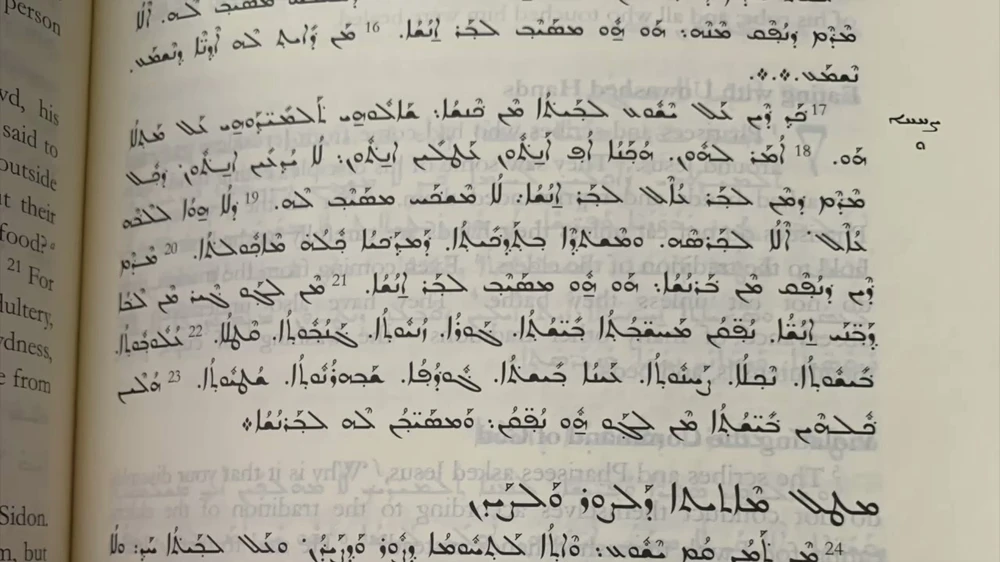
Aramaic was the language of Jesus and the disciples. So wouldn’t it be amazing if you could hear what the Aramaic New Testament sounded like? Wouldn’t it be exciting to hear this ancient, two thousand year old language come to life and hear it spoken today? Well, now you can! Andre will be reading and explaining the 1st century Custom Context Culture of the Gospel of Matthew. “Reading the Peshitta in Aramaic – The Book of Matthew” serves an important role for students who want to approach the New Testament closer to its Semitic linguistic world. The value of such a course becomes clearer when we consider the linguistic, historical, and exegetical dimensions of the Gospel of Matthew and the Peshitta tradition. One of the main goals of your course is to train students to read the text directly in Aramaic rather than relying on translations. Aramaic was the dominant spoken language of Judea and Galilee during the first century. Because of this, studying the Peshitta text of Matthew exposes students to: Semitic syntax and idiom Aramaic verbal structures Cognates with Biblical Hebrew Semitic wordplays and parallelism The Peshitta represents the ancient Syriac Christian tradition. While the canonical Greek text remains central for New Testament studies, the Peshitta provides: An early Semitic witness to the New Testament Evidence of how Eastern communities understood the Gospel A linguistic bridge between Greek tradition and Semitic culture When students read Matthew in Aramaic, they are engaging with a textual tradition used by the Syriac churches for centuries. This helps them understand how the Gospel circulated and was interpreted in the broader Near Eastern world. This course guides students to read the Gospel of Matthew directly in the Aramaic Peshitta, equipping them to engage the text within its original Semitic linguistic world.